PNGUoT Launches MSc in Climate Change and Renewable Energy Access
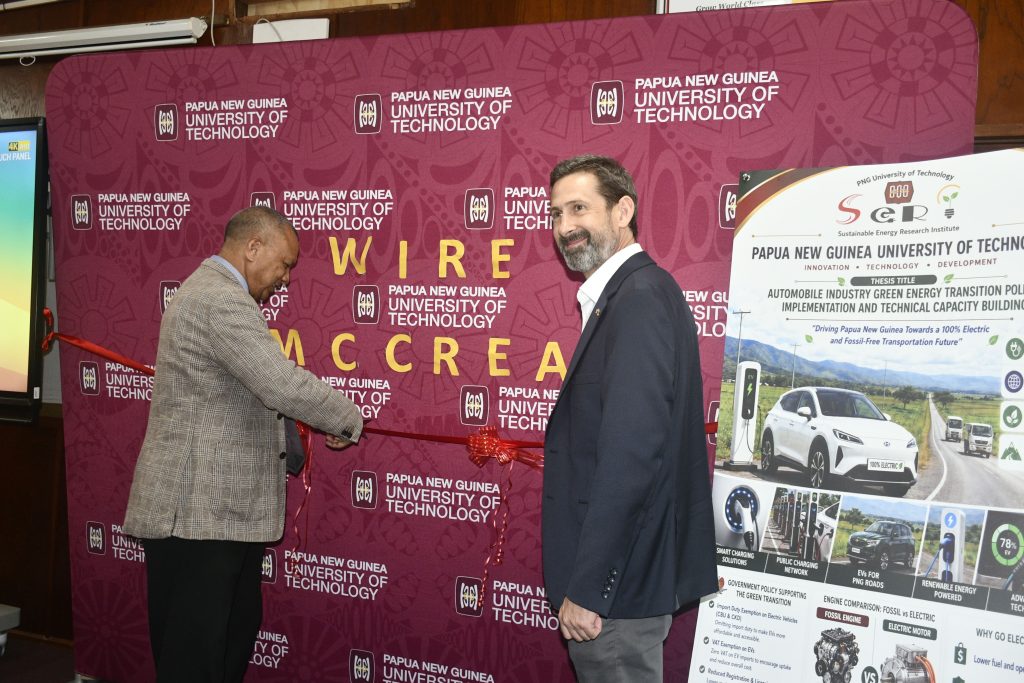
The Papua New Guinea University of Technology has launched a new Master of Science in Climate Change and Renewable Energy Access, funded by the Government of the United Kingdom to help strengthen Papua New Guinea’s technical capacity in climate resilience and renewable energy.
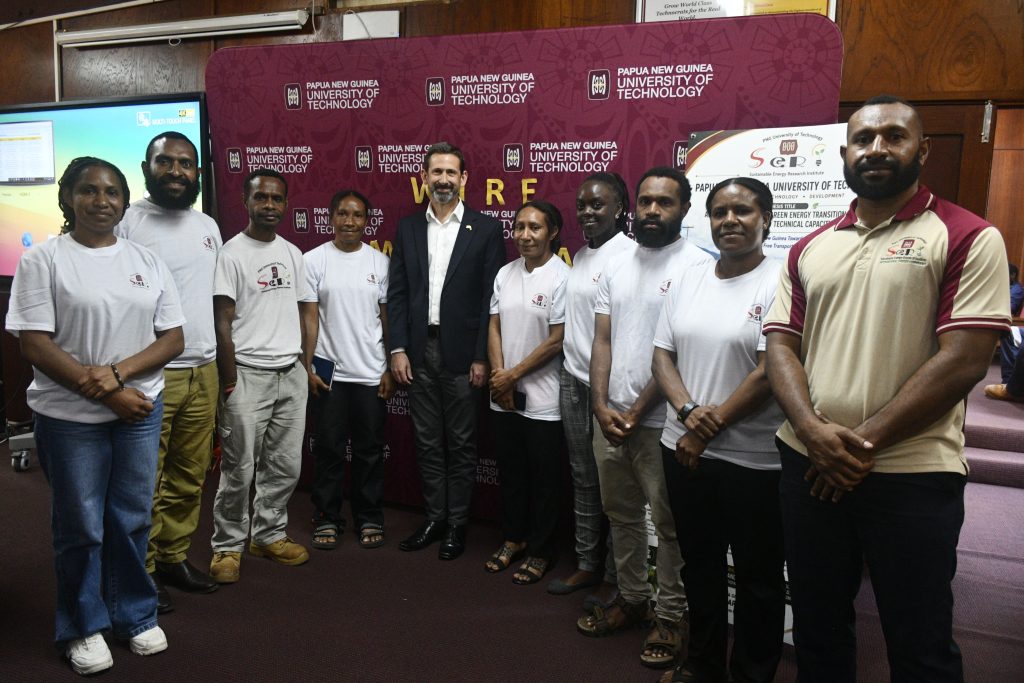
The program was launched alongside the Sustainable Energy Research Institute’s (SERI) Women in Renewable Energy (WIRE) initiative during a ceremony attended by British High Commissioner to Papua New Guinea His Excellency Paul Eastwood, PNGUoT’s Senior Executive Management, industry and government partners from the Science and Technology Sectretariat and National Energy Authority respectively, university leaders, academics and students.
Vice Chancellor Highlights Importance of International Partnerships
Welcoming the British High Commissioner and guests, Vice Chancellor Professor Ora Renagi said the launch represented an important step in strengthening PNGUoT’s international partnerships while developing the skilled human resources needed to respond to national and global challenges.
He highlighted climate resilience and renewable energy access as issues central to Papua New Guinea’s development, particularly as the country works towards increasing electricity access and meeting its climate commitments. “Papua New Guinea, climate resilience and renewable energy access are not separate issues. They are central to our national development,” Professor Renagi said. He said universities, as centres of knowledge and technology, had an important responsibility to develop the skilled human resources required to translate renewable energy knowledge and technology into practical solutions for communities, industry and the wider economy.
Professor Renagi acknowledged the support of the United Kingdom Government towards the new program and challenged academics and students to use the opportunity to develop innovative solutions to Papua New Guinea’s energy and climate challenges. He also congratulated SERI for maintaining partnerships that had helped secure support for the program and encouraged the University community to continue building international research and academic collaborations.
British High Commissioner Emphasises Education and Expertise
British High Commissioner His Excellency Paul Eastwood congratulated PNGUoT on establishing the program, describing education and the development of specialist expertise as essential to addressing environmental and energy challenges.
Drawing on more than 30 years of professional experience in environmental issues, including climate change and renewable energy, Mr Eastwood said the solutions to environmental challenges ultimately depended on developing people with the knowledge and skills to address them.
He said PNG presented a unique combination of environmental and development challenges, including protecting its globally significant forests while pursuing economic development, expanding access to electricity and strengthening resilience to the impacts of climate change. PNG, he said, was also endowed with significant renewable energy resources, including solar, wind and hydropower, but continued to face challenges in expanding access to reliable electricity.
“We are very pleased to fund the learning to help underpin that body of expertise to rise to those challenges,” Mr Eastwood said. He noted that technological advances had made renewable energy increasingly accessible, particularly solar and battery technologies, but said finance, policy and regulation remained important challenges to accelerating deployment.
Mr Eastwood said PNGUoT was among institutions in 30 countries being supported through the Transforming Energy Access Learning Partnership, which operates across Africa, Asia and the Pacific. Through the partnership, the UK Government is supporting education and skills development as part of its wider commitment to addressing climate change and improving access to affordable and accessible energy.
He also acknowledged the leadership of PNGUoT, SERI and the academic and support staff involved in designing and delivering the new postgraduate program.
Building PNG’s Climate and Energy Workforce
The MSc in Climate Change and Renewable Energy Access is intended to develop advanced knowledge and expertise to support Papua New Guinea’s transition towards greater renewable energy use, improved energy access and stronger climate resilience.
The program responds to the need for skilled professionals who can contribute not only to renewable energy technology, but also to research, policy, regulation, investment, implementation and sustainable development.
Professor Renagi said developing human resources was particularly important if PNG was to translate existing renewable energy knowledge and technologies into practical outcomes.
“We need the human resource to be working with the solar cells and installing solar panels and building solar systems,” he said. He encouraged graduates of the program to become researchers, engineers, scientists, policy makers, entrepreneurs, managers and leaders capable of contributing across the renewable energy sector.
Students Already Undertaking the Program
While the occasion marked the program’s official launch, the MSc is already underway, with a cohort of students currently undertaking their studies. During the launch, it was confirmed that 5 students were in the first year while 7 students have graduated to the second year of the program. The British High Commissioner acknowledged the inaugural cohort and the second cohort entering the program.
Mr Eastwood told the students they were entering an area with significant potential for future employment as demand for environmental, climate and clean-energy expertise continue to grow.
“There would be no program without you,” he told the students, congratulating them for choosing a field of increasing importance.
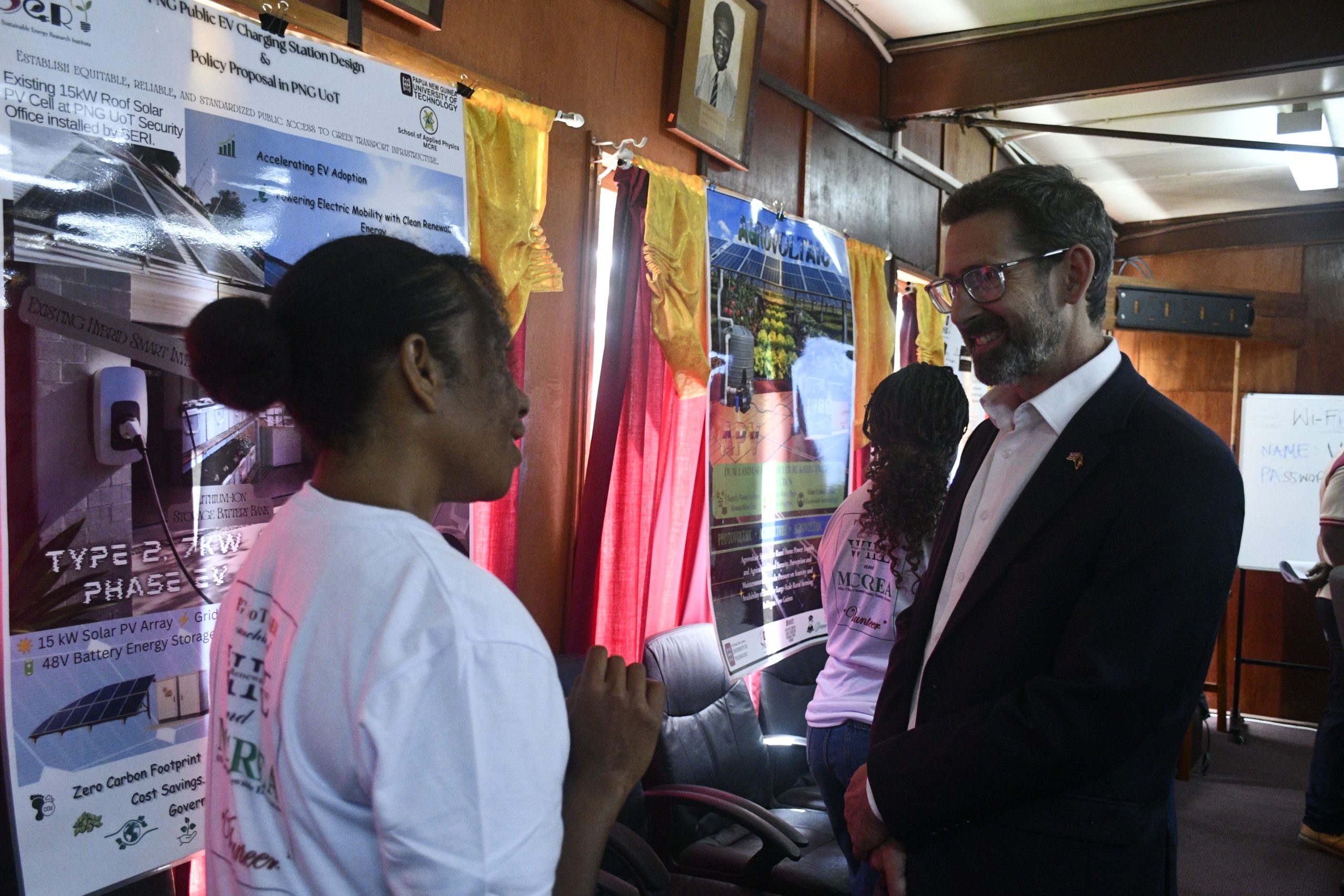
The students also presented posters showcasing their work during the program, highlighting the research and learning already taking place through the postgraduate course.
The launch reinforces PNGUoT’s commitment to developing specialised skills and research capacity that can contribute to Papua New Guinea’s climate resilience, energy security and sustainable development, while strengthening collaboration between Papua New Guinea and the United Kingdom.