PNGUoT Joins Global Partnership to Strengthen Higher Education
The Papua New Guinea University of Technology (PNGUoT) is participating in a 36-month international project aimed at strengthening higher education through improved teaching and learning, research collaboration, academic mobility and institutional capacity building.
The project, Opening Collaboration for Education and Academic Networks (OCEAN) in the Maldives and Papua New Guinea, brings together nine institutions from Europe, the Maldives and Papua New Guinea to develop stronger international academic networks and create opportunities for staff and students.
Co-funded by the European Union under the Erasmus+ Programme, OCEAN focuses on strengthening institutional strategies, promoting inclusive education, updating curricula and supporting sustainable practices within higher education institutions.
Acting Dean of Faculty of Postgraduate Studies, Research and Innovation, Professor Rajashekhar Rao said that for PNGUoT, the collaboration provides opportunities to enhance its teaching and learning approaches, strengthen international research partnerships and develop staff capacity through knowledge exchange, professional training and academic mobility.
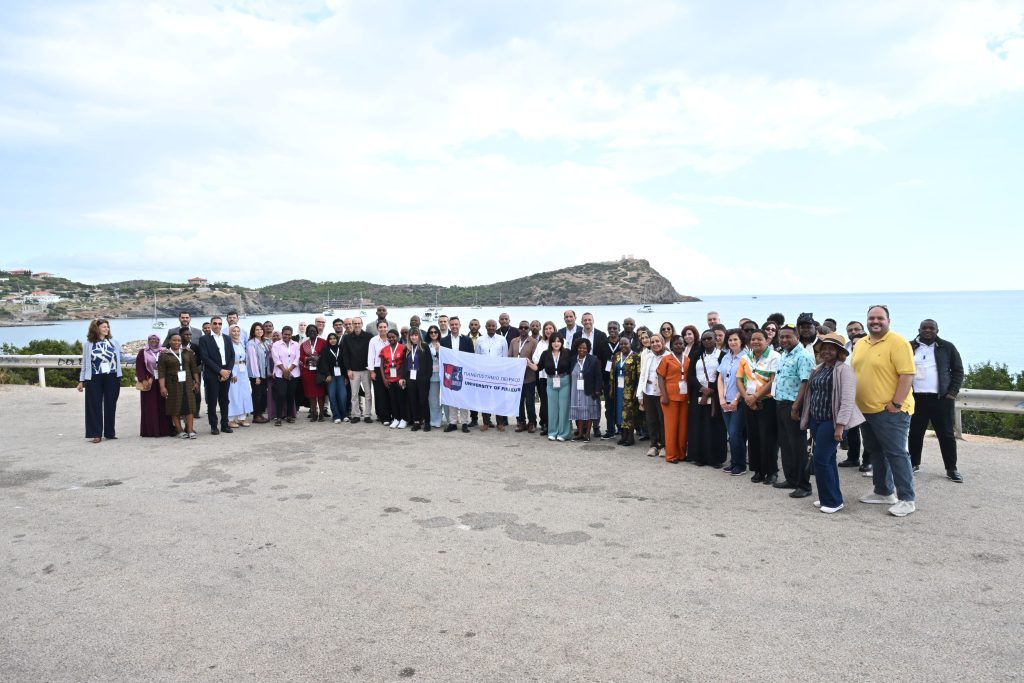
As part of the project’s activities, three PNGUoT representatives recently participated in an international mobility and training programme hosted by partner institutions in Greece and Italy.
The representatives were Dr Immaculate Azabo, Director of the Teaching and Learning Methods Unit; Ms Pamela Dubaba, Senior Assistant Registrar, Faculty of Postgraduate Studies, Research and Innovation; and Ms Rachel Kobal, Internationalisation Officer, Office of Strategic Internationalisation.
The training took place at the University of Piraeus in Greece from 11–15 October 2026 and the University of Rome Tor Vergata in Italy from 16–22 October 2026.
Their participation forms part of the project’s broader efforts to strengthen professional development and institutional capacity through international cooperation.
Beyond staff training, OCEAN will support strategic planning for internationalisation, blended learning, academic exchanges and collaborative research among participating institutions.
The project also emphasises cooperation with local stakeholders, environmentally responsible campus initiatives and inclusive education, contributing to the green transition in higher education.
Reflecting on the experience, Ms Dubaba said the training provided valuable insights into internationalisation, digital learning, sustainability, inclusive education and research collaboration.
“I learned that successful international collaboration goes beyond signing MoUs. It requires active engagement, shared objectives, commitment and mutual benefits,” she said.
She highlighted the importance of translating international partnerships into practical benefits for PNGUoT, particularly in teaching, research, curriculum development and academic exchanges.
“We need to translate the knowledge and partnerships gained into practical outcomes that strengthen the University, create opportunities for staff and students, and enhance our international presence.”
The nine-member consortium includes four European institutions: the University of Rome Tor Vergata in Italy, University of Piraeus Research Center in Greece, Universidad de Las Palmas de Gran Canaria in Spain and Institut de Haute Formation aux Politiques Communautaires in Belgium.
The Maldives is represented by Zikura International College and Mianz International College, while PNGUoT joins Divine Word University and the University of Goroka as the three participating institutions from Papua New Guinea.
Through these partnerships, the project seeks to support improved institutional strategies, wider academic mobility opportunities, updated curricula and more inclusive and sustainable higher education environments.
PNGUoT’s participation in OCEAN is expected to contribute to its long-term internationalisation efforts while creating opportunities for staff and students to engage in academic exchanges, research collaboration and professional development.
The University aims to use these partnerships to strengthen its contribution to higher education, research and national development.
Pictures supplied by the University of Piraeus, Greece.