
Head of School
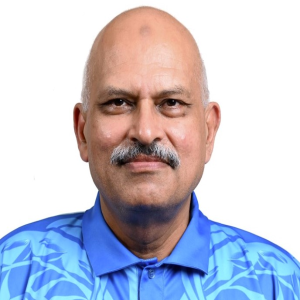
Professor Ahmad Sana
Head of School
“Civil Engineering – Building the Nation”
As the Head of the School of Civil Engineering, I am proud to lead a program that not only trains engineers in modern technical knowledge but also recognizes and respects the cultural and historical context of infrastructure development in Papua New Guinea.
Long before the introduction of modern engineering practices, communities across Papua New Guinea developed practical solutions to meet their needs. Traditional knowledge guided the construction of houses, footbridges, gardens, irrigation systems, and village pathways. These structures were designed with a deep understanding of local materials, climate, and landscape. For example, traditional stilt houses in coastal regions were carefully built to protect families from flooding and tides. At the same time, highland communities developed terracing and drainage systems that supported agriculture in mountainous terrain.
The history of civil engineering in Papua New Guinea as a formal profession began during the colonial period when large-scale infrastructure projects were introduced. Roads, airstrips, government buildings, ports, and communication systems were developed to connect different parts of the country. After independence in 1975, Papua New Guinea faced the challenge of expanding and maintaining infrastructure to support national development. Civil engineers became central to this mission, designing and constructing transportation networks, water supply systems, sanitation facilities, and public buildings that serve our growing population.
The School of Civil Engineering plays a critical role in preparing the next generation of engineers to meet these challenges. Our mission is to educate and inspire students to become skilled professionals who are capable of designing and building infrastructure that improves the quality of life for all Papua New Guineans. We strive to combine strong academic training with practical experience so that our graduates are well prepared to work in both local and international contexts.
One of the key strengths of our program is the integration of local knowledge with modern engineering practices. We encourage students to learn from traditional building techniques and community-based approaches to resource management. By understanding how local communities have historically adapted to their environments, our students can design infrastructure solutions that are more appropriate, sustainable, and culturally respectful. This approach helps bridge the gap between traditional wisdom and contemporary engineering innovation.
Research and innovation are also central to the work of the School of Civil Engineering. Our faculty members and students are engaged in projects that address pressing challenges facing Papua New Guinea. These include improving rural road networks, developing sustainable water supply systems for remote communities, strengthening disaster-resilient infrastructure, and exploring environmentally friendly construction materials. Through partnerships with government agencies, industry partners, and international institutions, we aim to contribute practical solutions that support national development goals.
Another important focus of our school is community engagement. Civil engineering is ultimately about serving people. Our students are encouraged to participate in fieldwork, community-based projects, and internships that allow them to apply their knowledge in real-world settings. These experiences help students understand the needs of diverse communities and appreciate the importance of communication, collaboration, and ethical responsibility in engineering practice.
Papua New Guinea is entering a period of rapid development and transformation. Infrastructure will continue to play a vital role in connecting communities, supporting economic growth, and improving access to essential services such as education, healthcare, and clean water. The demand for skilled civil engineers has never been greater. Our school is committed to producing graduates who are not only technically competent but also socially responsible and dedicated to serving the nation.
We invite students, researchers, industry partners, and community leaders to work with us as we continue to advance civil engineering education and innovation in Papua New Guinea. Together, we can build a stronger and more resilient nation.
Ahmad Sana, PhD, MASCE, MIAHR, MIEPNG, PE
Professor and Head
Civil Engineering Vision
To be the premier Civil Engineering provider in PNG and the South Pacific that grows world-class Civil Engineers or technocrats for the real world.
Civil Engineering Mission
To provide an opportunity to grow world-class Civil Engineers or technocrats through high-quality experiential Teaching & Learning, Research & Development, External Collaboration & Partnerships, Consulting Engineering, Commercial Testing, and Active Community Services with an ardent application of scientific and technological knowledge and innovation in Civil Engineering.
Civil Engineering Core Values
To live in a culture of world-class Civil Engineers or technocrats who are honest and accountable for what they do, who are aware and with inclusiveness in a culturally diverse world, who are resourceful, who work innovatively and creatively to meet the fast pace of development with sustainability, and who can work as a team to achieve the vision and mission.
Graduate Statement
The Unitech Civil Engineering Graduate will plan, design, construct, maintain and manage the nation’s physical infrastructure in a professional and sustainable manner.
Civil Engineering Graduates Attributes
Effective and appropriate communication skills to present a clear and coherent exposition of civil engineering knowledge and ideas to a variety of audiences across all levels of society.
Skills to review, analyze, consolidate, and synthesize knowledge to identify and provide solutions to complex problems in Civil Engineering with intellectual independence.
Undertake various team roles, work effectively within a team, and utilize effective teamwork skills to achieve professional outcomes. Apply interpersonal skills to interact and collaborate to enhance outcomes through shared individual and collective knowledge within their specialization.
Act responsibly and with accountability for our behavior and practice ethically and professionally.
Recognize the need for engaging in life-long learning to ensure contemporary knowledge within their specialization to address issues due to changing technical scenarios and the ability to address challenges using a problem-based approach.
Cognitive, technical, and creative skills to investigate; analyse, and synthesize complex information and theories to generate appropriate theoretical and professional responses to problems in Civil Engineering.