PNGUoT Student Innovations Recognised at National Research Conference
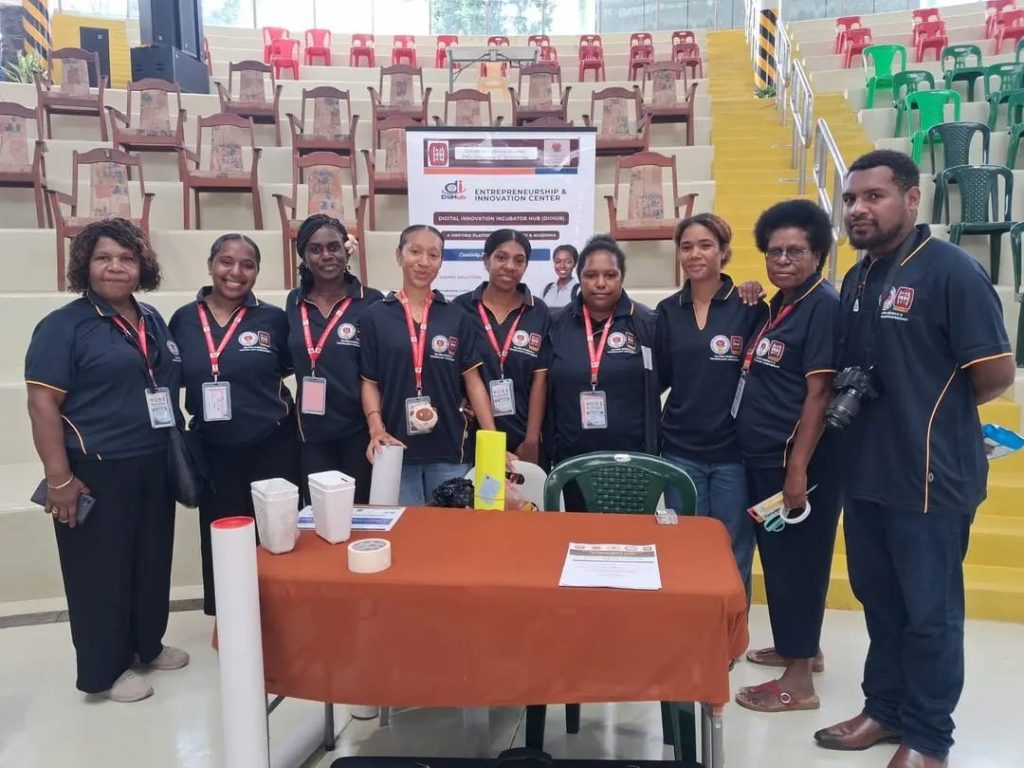
Two student innovation teams from the Papua New Guinea University of Technology (PNGUoT) received national recognition for developing mobile applications aimed at addressing challenges in language preservation and community infrastructure reporting.
The students were among three teams representing the University’s Digital Incubator Innovation Hub (DiiHub) at the 8th National Research, Science and Technology Conference, held at the University of Goroka from 22 to 25 September 2026.
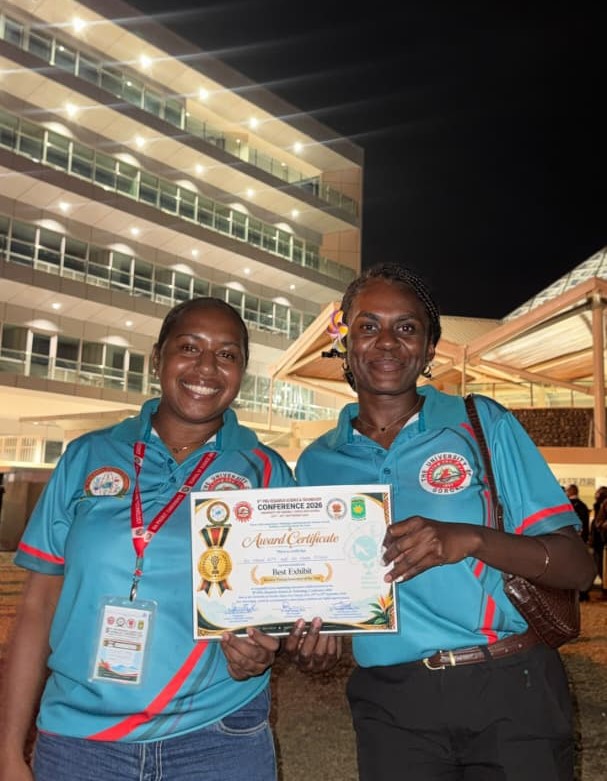
The LingoLabs Solutions team received the Rookie/Young Innovator of the Year Award for Rualingo, a mobile application designed to support the learning and preservation of indigenous Papua New Guinean languages.
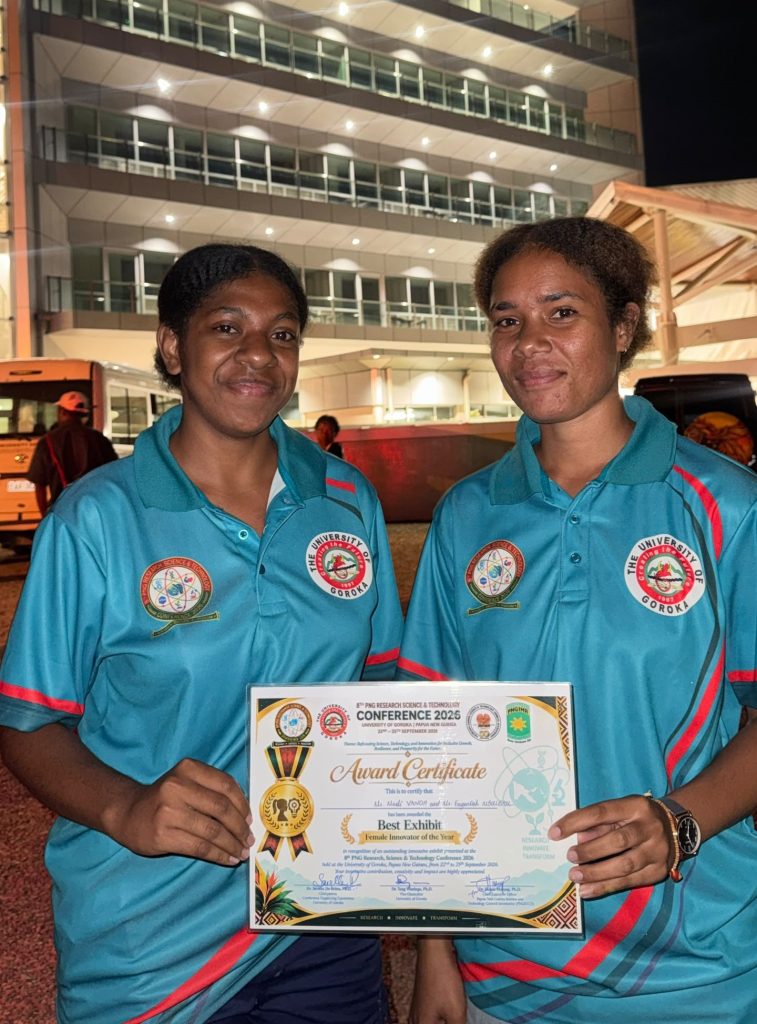
Meanwhile, the team behind Sulumwen Sal, a mobile application for reporting road, traffic and infrastructure faults, received the Best Female Innovator of the Year Award.
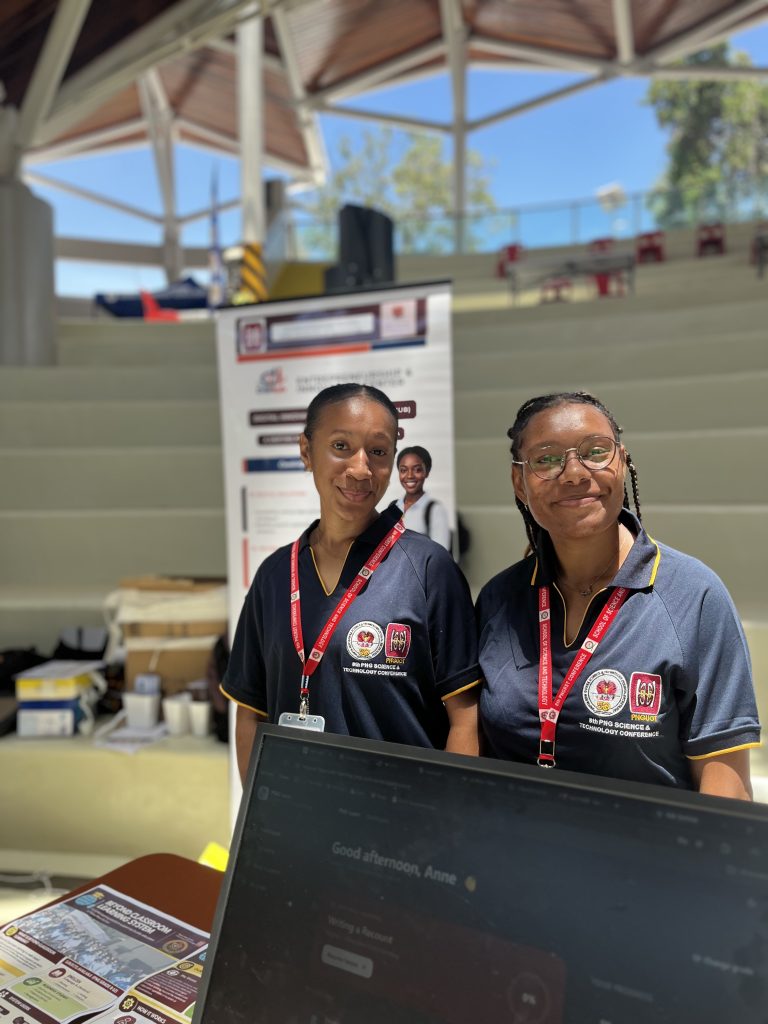
The third team exhibited Beyond Classroom Learning, a web-based education support system designed to help secondary school students continue learning during disruptions to formal classroom education.
All three projects demonstrate how students are applying knowledge gained through their studies to develop technology-based solutions to challenges affecting communities in Papua New Guinea.
Rualingo: Preserving PNG’s Indigenous Languages Through Technology
Developed by LingoLabs Solutions, Rualingo is an Android mobile application designed to make learning indigenous Papua New Guinean languages more accessible, particularly for younger generations and people living away from their home communities.
The team comprises third-year Bachelor of Business in Information Technology (BBIT) students Naomi Aita, Lead Developer; Noella Lewana Tsigese, Project Manager; Mushen Mirinu, Systems Designer; and Tianalenga Barae, Systems Analyst. Naomi and Noella represented the team at the conference.
The application currently provides introductory lessons in four languages: Tok Pisin, Duna Duna ( Koroba-Kopiago, Hela) , Tiang (Kavieng New Ireland Province) and Motu.
With more than 800 languages spoken across Papua New Guinea, the team identified the limited availability of digital learning resources for indigenous languages as a challenge, particularly as younger generations increasingly communicate in English and Tok Pisin.
Reflecting on the significance of their innovation, the team stated:
“When a language is lost, a piece of our identity is lost with it. Rualingo is our step towards making sure that never happens.”
The application has potential uses in homes, communities and schools, including supporting vernacular language learning and helping families pass their languages on to younger generations.
The team plans to introduce audio pronunciation, expand lesson content, incorporate additional languages and work with native speakers and elders to ensure accuracy. Future development will also include user testing and exploring partnerships with educational and cultural organisations.
The project was developed with guidance from lecturer Mrs Raunu Gebo Sarsoruo and contributions from individuals who shared their language knowledge to support the development of lesson content.
Sulumwen Sal: Improving Community Infrastructure Reporting
The Sulumwen Sal mobile application was developed by School of Business Studies students Mei Li Vanoh, Eugeniah Mbuleau, Annelish David and Kenny Nauna, under the guidance of lecturer Mr Rodney Naro.
The application seeks to address challenges associated with reporting damaged roads and public infrastructure across Papua New Guinea.
Through the platform, users can report potholes, damaged roads, blocked drainage, damaged bridges and other infrastructure faults by submitting photographs, descriptions and location information.
The system is intended to provide a more organised way of documenting infrastructure problems and potentially improve communication between communities and relevant authorities.
The team explained:
“This project is important to us because it shows that as students, we can use our knowledge and technology to create solutions for real problems in our communities. Sulumwen Sal is more than just a university project; it is an opportunity to use innovation to make a positive difference in Papua New Guinea.”
Beyond infrastructure reporting, the application also includes features for reporting security incidents, agricultural pests and diseases, and supporting buying and selling activities.
The students intend to further test and improve these features, with the long-term goal of developing Sulumwen Sal into a reliable multipurpose application that can respond to different community needs.
The team received the Best Female Innovator of the Year Award in recognition of its innovation at the conference.
Beyond Classroom Learning: Supporting Education During Disruptions
The third project, Beyond Classroom Learning, is a web-based education support system developed by third-year BBIT students Sharon Karato, Team Leader; Anne Arpa; and Jossey Gaglma from the School of Business Studies.
The platform was developed to address learning disruptions affecting students, particularly those in rural communities where tribal conflicts, natural disasters, teacher shortages and limited educational resources can interrupt classroom teaching.
Designed for students in Grades 8 to 12, the platform provides supplementary learning materials organised according to grades, subjects, units and topics.
Students can access lessons through three learning options: reading, listening to audio or watching videos. Each lesson also includes quizzes to help students assess their understanding.
An additional feature is a restricted artificial intelligence study assistant that provides guidance using information already contained within the platform’s learning materials.
The team explained the significance of the project:
“This platform helps students continue learning anytime, anywhere and bridges the learning gap between urban and rural students and helps students keep up with their learning pace.”
The project was initially developed as part of the students’ third-year coursework before the team continued improving it through extracurricular activities with DiiHUB.
Currently, the platform requires an internet connection. The students are working towards introducing offline access so that learners can save educational materials for use when internet connectivity is unavailable.
The project aims to complement existing classroom teaching rather than replace teachers, while providing students with additional resources to support independent learning.
From Classroom Projects to National Innovation
The three projects were showcased during the conference’s innovation exhibition, where students presented their work to academics, researchers, fellow students and other participants.
Their participation provided an opportunity to receive feedback, exchange ideas and gain exposure to other research and technological developments taking place across Papua New Guinea.
The experience also allowed the students to see how projects developed through their academic studies could have practical applications beyond the University.
The students acknowledged the support of DiiHub, their lecturers and mentors, as well as the PNG Science and Technology Council Secretariat, which enabled participation in the conference.
The three teams represented the wider student innovation activities being undertaken through PNGUoT’s Digital Incubator Innovation Hub (DiiHub), which encourages students to develop solutions to real-world challenges.
DiiHub: An Avenue for Innovation and Collaboration
DiiHub provides a platform for students to apply their academic knowledge and creativity through project development, mentorship and collaboration. The initiative combines curriculum-based learning with extracurricular activities, allowing students to further develop their ideas beyond formal classroom assessments with assistance from willing participating staff as mentors.
Reflecting on the students’ participation at the Research, Science and Technology (RST) Innovation Exhibition, the DiiHub Coordinator and Business IT Lecturer Ms Francisca Pambel expressed pride in their achievements and the positive response their projects received.
“I am very proud of our students and how they represented the University. What stood out for me was their realisation that the projects they had been developing were not just classroom activities, but solutions to real problems. They were surprised by the level of interest shown in their work, and I believe this experience has given them greater confidence in what they can achieve.”
She also acknowledged the support of the University management, academic colleagues and sponsors in creating opportunities for students to develop and showcase their innovations.
“We are grateful for the support of the Deputy Vice-Chancellor, our Head of School, colleagues and our main sponsor, the Office of the PNG Science and Technology Council Secretariat. Their encouragement and support have helped us take these student projects beyond the classroom and provide a platform for students to demonstrate their capabilities.”
She said the long-term intention of the DiiHub is to encourage a stronger culture of innovation across the University, where student projects are not simply assessed and filed away but developed further and potentially taken up by industry.