
PNGUoT Applied Physics Programme Undergoes International Accreditation Review
The Papua New Guinea University of Technology’s (PNGUoT) Applied Physics degree programme has undergone an external accreditation review by the Australian Institute of Physics (AIP), as part of the University’s efforts to strengthen academic quality and align its programmes with internationally recognised standards.
The review, conducted by a three-member AIP assessment panel on October 6 , examined the programme’s curriculum, teaching practices, laboratory facilities and student learning experiences to determine how these align with the Institute’s accreditation requirements.
Chairman of the assessment panel, Professor Martin Sevior, explained that the visit focused on verifying whether the information presented in the School’s accreditation documentation reflected its actual teaching and learning practices.
“What we want to do in this visit is to validate that what’s written on paper is actually what’s happening on the ground,” he said.
The assessment involved discussions with academic staff and students, reviews of academic records and teaching materials, and inspections of laboratory facilities and practical experiments.
Professor Sevior said the panel placed particular importance on students’ ability to connect theoretical knowledge with practical applications.
The panel will prepare a report on its findings for consideration through the AIP’s accreditation Committee, with a formal decision to follow.
The School of Applied Physics is the first of three schools within the Faculty of Science to undergo an external accreditation assessment. The Schools of Mathematics and Computer Science and Applied Sciences are expected to follow.
Vice Chancellor Professor Ora Renagi said the accreditation process was an important part of the University’s commitment to maintaining academic standards and ensuring its graduates were equipped to contribute meaningfully to industry and society.
“Our vision from the executive management is really to be competitive at the world stage as a university,” Professor Renagi said.
He explained that the University’s pursuit of international standards was not simply about recognition, but also about ensuring that the scientific knowledge and technical skills acquired by students could be applied to addressing challenges facing Papua New Guinea.
He further emphasized the importance of producing work-ready graduates who could support industry development, innovation and improvements in people’s livelihoods.
Head of the School of Applied Physics, Dr David Kolkoma, acknowledged the collective efforts of academic, technical and administrative staff in preparing for the review.
“The assessment process has given us an important opportunity to reflect on our program, recognize areas of strength and identify areas where further improvement is required,” Dr Kolkoma said.
He also acknowledged the contribution of academics from Macquarie University, who assisted the School with benchmarking and establishing contact with the AIP.
The review required extensive preparation, including curriculum mapping, assessment records, laboratory documentation and evidence of academic quality assurance.
The University’s Faculty of Science has identified external accreditation as an important mechanism for evaluating programme quality and supporting continuous improvement.
The School of Applied Physics will now await the outcome of the AIP’s assessment process, while using the review findings to guide further improvements in teaching, learning and academic standards.
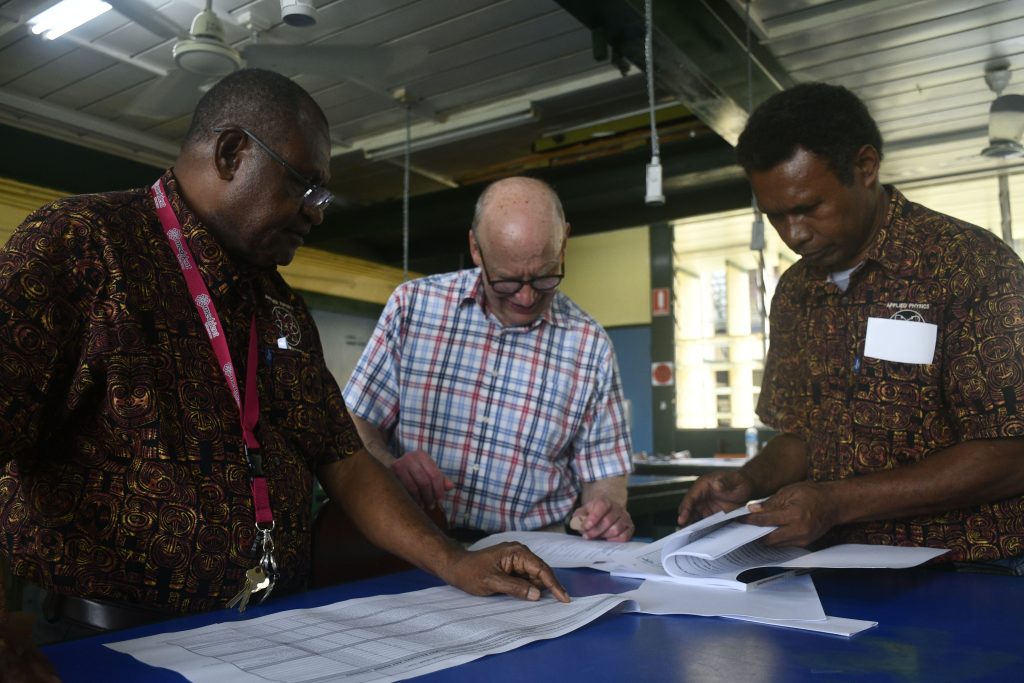
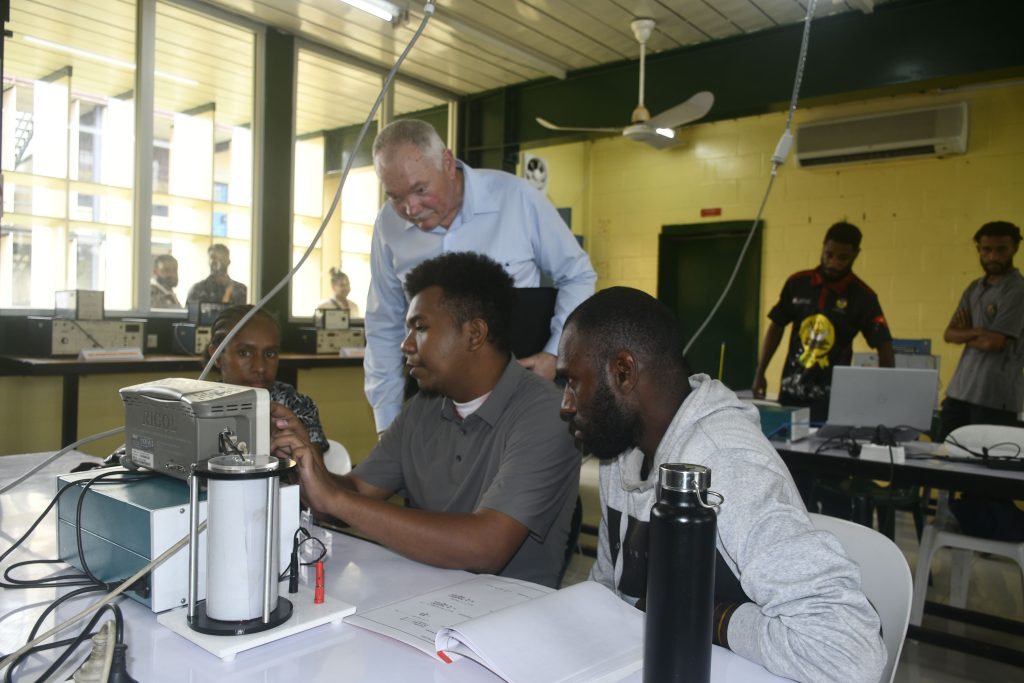
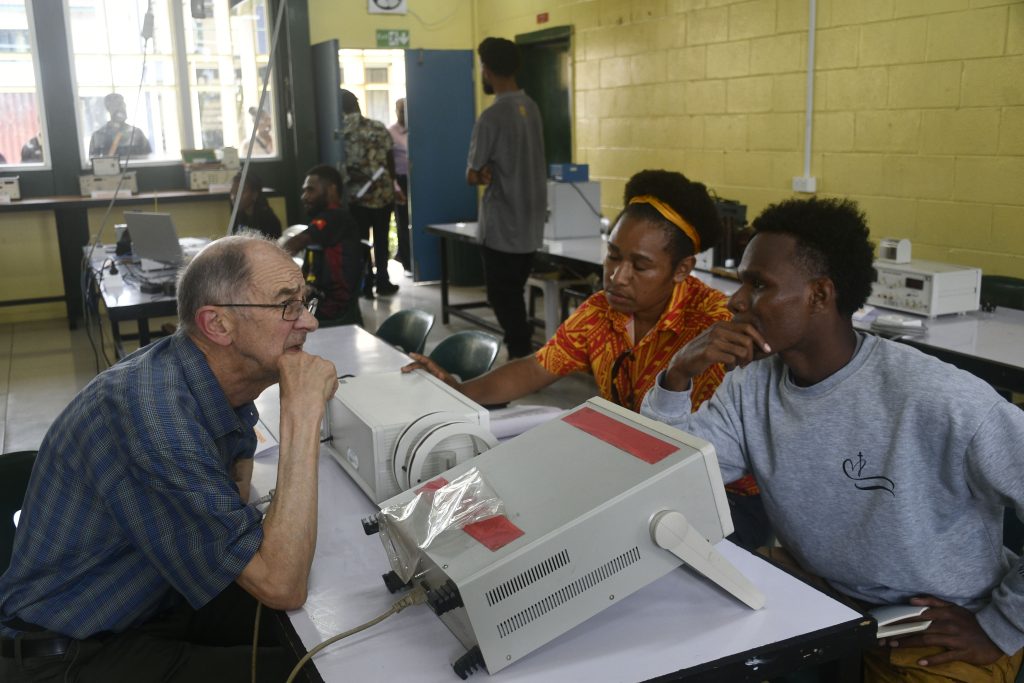
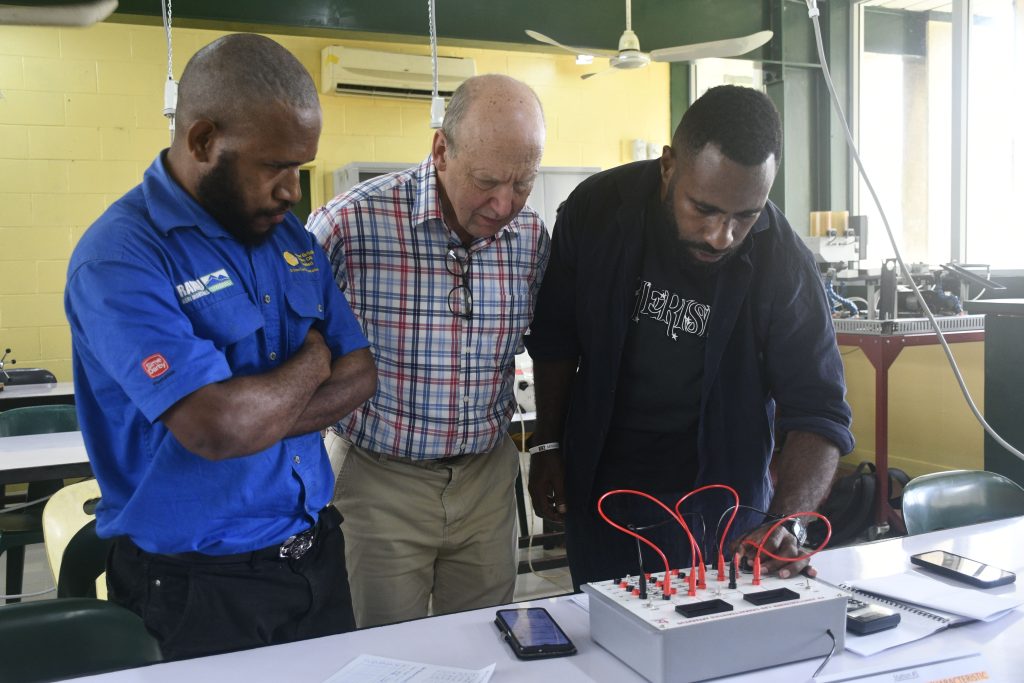
Australian Institute of Physics panel members engage with staff and students during a review of the laboratory facilities.