PNGUoT, Geoscience Australia Partner to Strengthen Earthquake Preparedness in Lae
A growing partnership between Australia and Papua New Guinea is helping strengthen earthquake monitoring, disaster preparedness and technical capacity in Lae, bringing together Geoscience Australia, the Papua New Guinea University of Technology (PNGUoT), the Mineral Resources Authority (MRA), the Provincial Disaster Office and local communities.
A Partnership for Safer Communities
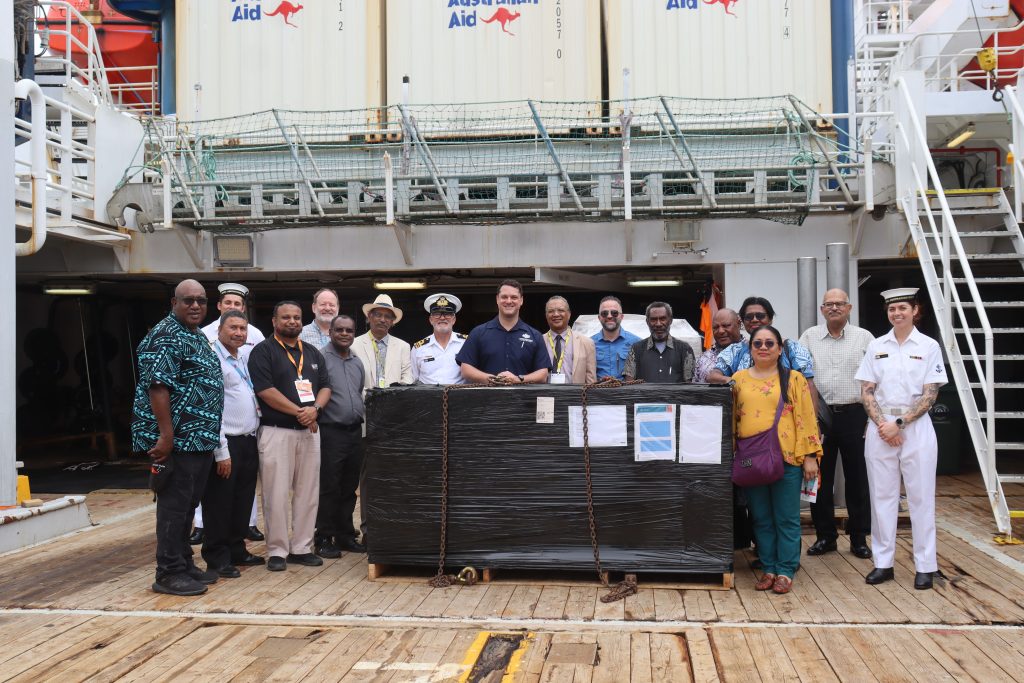
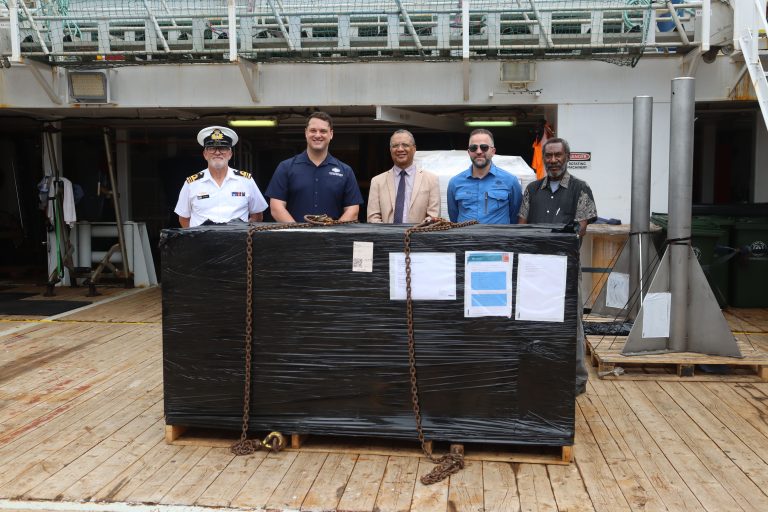
The partnership was highlighted during a special handover ceremony aboard the Australian Defence Vessel Reliant, currently in the Huon Gulf off the coast of Lae, where technical equipment was formally handed over to PNGUoT as part of ongoing Australia-Papua New Guinea cooperation.
The equipment will support joint initiatives in earthquake monitoring and surveying, including the newly established Lae Shake Awareness Program, which aims to improve understanding of earthquake activity and ensure information can quickly reach those responsible for emergency response.
Dr Hadi Ghassemi, PNG Program Coordinator at Geoscience Australia, said collaboration is at the heart of the initiative.
“At the core of the Lae Shake Awareness Program is working together. We are hoping to work closely with Unitech Lae, the Mineral Resources Authority, the Provincial Disaster Office and the community to build a link that works and delivers something useful for community safety,” he said.
Building an Earthquake Monitoring Network
As part of the first phase, the program plans to establish at least 10 monitoring stations across Lae. The stations will collect ground-shaking data and transmit it to two monitoring centres, one at PNGUoT and another at the Provincial Disaster Office, in collaboration with MRA.
The program also recognises the value of community knowledge. In a future phase, subject to funding, community representatives will be trained to report when they feel an earthquake. These observations will be combined with information from the monitoring stations to provide a more comprehensive picture of earthquake activity across the city.
Ghassemi said the program would combine information from both monitoring equipment and the community, describing people as another important source of information when an earthquake occurs.
Turning Data into Action
Students from PNGUoT are expected to play an important role in developing systems to process the information and display it through a real-time Geographic Information System (GIS) map.
The information will be made available to disaster managers and emergency responders, helping them assess an event and respond more effectively without relying on multiple phone calls to establish what is happening across the city.
Building Skills for the Future
Beyond the technology, the initiative is also focused on building long-term local expertise.
“We are also hoping to transfer knowledge and skills to Unitech Lae so that they can train the young, bright students to become the workforce of the future and help fill the skills gaps within government and other organisations,” Ghassemi said.
For Vice Chancellor Professor Ora Renagi, the initiative represents more than the introduction of new technology. It is an opportunity to equip young Papua New Guineans with knowledge and skills that can be applied directly to national development and community safety.
“I am responsible for educating young men and women to be knowledgeable about the challenges that we face,” Professor Renagi said.
He acknowledged the support of the Australian people, the Australian Government and Geoscience Australia, noting that the rapid growth of Lae makes it increasingly important for young people to understand the scientific and environmental challenges facing the city.
“This will give young men and women another opportunity to study science, geology, geography and the seismicity of the area,” Professor Renagi said. “They can go on to work in emergency departments and for governments, helping to make sure that our communities are prepared and able to protect themselves.”
Strengthening the Australia-PNG Partnership
Australian High Commission Consul General in Lae, Brenton Kanowski, said the handover demonstrated the practical nature of the Australia-Papua New Guinea partnership.
He said the equipment formed part of joint programs between Geoscience Australia and PNGUoT, including work to strengthen the country’s ability to monitor earthquake activity and support surveying activities.
The surveying component will include specialist pillars that will be installed in the ground to track movement of the earth using the Global Positioning System (GPS), providing valuable information for scientific and surveying purposes.
Kanowski also highlighted the significance of the Reliant‘s visit to Lae, describing the vessel as part of Australia’s humanitarian and disaster response capability in the Pacific.
The visit provided an opportunity for PNGUoT representatives, including the Vice Chancellor, other members of the Senior Executive Management and relevant heads of departments and staff, to see the capabilities of the vessel and learn more about Australia’s disaster response capacity.